
Yes, an Ontario condo can restrict pets, and some ban them outright. Pet rules come from the condo’s governing documents (the declaration, by-laws and rules) and can limit the number, size, weight or breed of animals and where they may go. Service animals that assist people with disabilities are not treated as pets, and those rights are protected by the Ontario Human Rights Code. Read the documents before you buy or rent.
Key takeaways
- Pet restrictions can appear in the declaration, by-laws or rules, and owners and occupants must follow them.
- Where city by-laws and condo rules differ, the stricter limit effectively applies.
- Service animals, including those supporting people with disabilities, are not considered pets.
- The Condominium Authority Tribunal can hear pet and animal disputes; tenants cannot file cases themselves.
- Rules added later do not always grandfather existing pets, so read the exact wording.
Where condo pet rules come from
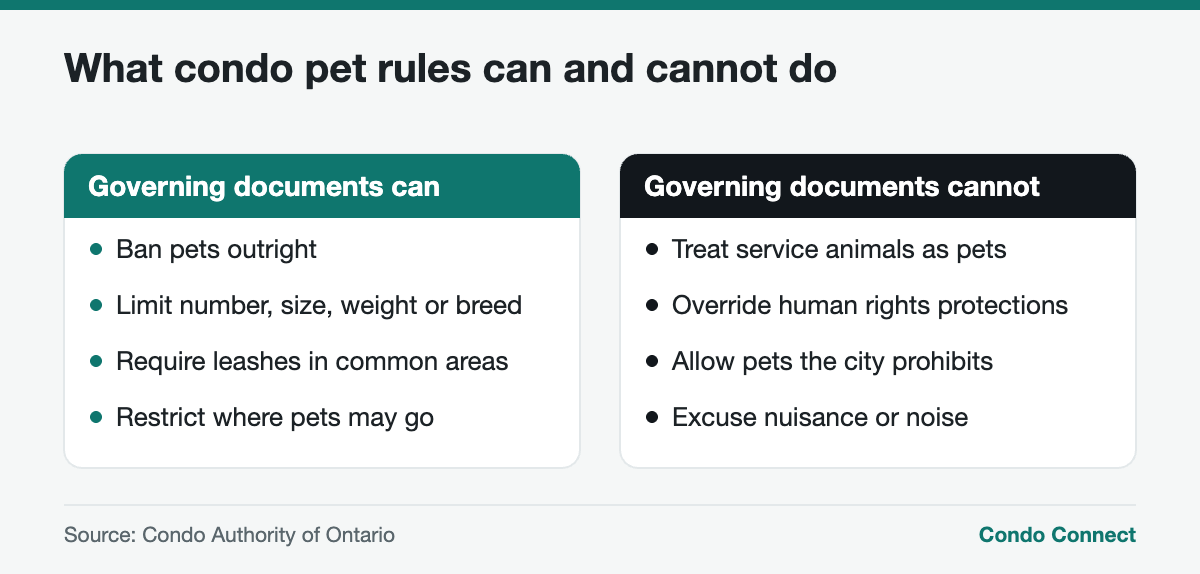
The Condo Authority of Ontario notes that condo corporations often have specific provisions on pets and animals in their governing documents. These can include:
- Outright bans on pets.
- Limits on the number of pets per unit.
- Weight, size or breed limits.
- Restrictions on where pets may go, such as amenity areas or certain elevators.
- Leash requirements in common areas.
Which document holds the restriction matters, because each is changed in a different way.
| Where the pet restriction sits | Who makes or changes it | How easy it is to change |
|---|---|---|
| Declaration | Amended only with a high level of owner consent | Hardest |
| By-laws | Passed by the board and approved by owners | Moderate |
| Rules | Made by the board, with notice to owners, and must be reasonable | Easiest; owners can object through a meeting |
A pet ban in the declaration is unlikely to go away. A weight limit in the rules might be loosened if enough owners push for it, or tightened just as easily.
City by-laws and condo rules together
Owners and occupants must comply with both municipal by-laws and the condo’s governing documents. The CAO gives a simple example: if the city allows three animals but the condo allows two, the limit for that condo is two. A condo cannot permit an animal or a number of animals that the municipality prohibits, and it can be stricter than the city.
Service animals and the Human Rights Code
The CAO is clear that service animals are working animals that assist people with disabilities and are not considered pets. It includes emotional support animals and guide dogs in that description. An animal may be recognized as a service animal if it wears an easily identifiable vest or harness, or if the owner provides documentation from a regulated health professional.
These protections come from the Ontario Human Rights Code, which takes priority over a condo’s pet restrictions. A board that receives a request should deal with it promptly and fairly, and an owner should be ready to provide appropriate documentation. If you are unsure, get advice from a lawyer or the Human Rights Legal Support Centre before the dispute escalates.
Nuisance: the rule that applies to every pet
Even where pets are allowed, owners are responsible for their behaviour. The CAO points to section 117(2) of the Condominium Act, which prohibits anyone from carrying on a nuisance, and section 119(1), which requires everyone to comply with the Act and governing documents. Section 17(3) requires corporations to enforce those documents.
In practice, persistent barking, aggression, odours or waste in common areas can lead to complaints, warnings, legal costs charged back to the owner and, in serious cases, an order to remove the animal. Damage a pet causes can also bring the corporation’s insurance deductible into play; our guide to condo insurance in Ontario explains how chargebacks work.
Pet disputes and the Condo Authority Tribunal
The Condominium Authority Tribunal is an online tribunal for condo disputes. According to the Condominium Management Regulatory Authority of Ontario, its jurisdiction includes pets and animals, vehicles, parking and storage, and nuisances such as noise, odours, smoke and vibration. Owners and corporations can bring cases; tenants cannot, and the CAO directs them to their landlord instead.
The Tribunal has ordered pets removed in some cases and has awarded costs against owners. It is cheaper and faster than court, but it is not a formality. The same Tribunal handles parking disputes, which we cover in our guide to condo parking and lockers.
Tip: If you have a large dog, search the governing documents for “weight” and “lbs” as well as “pet” and “dog.” Many Toronto condo rules use a weight limit rather than a ban, and a limit written for a puppy you own today may not fit the dog it becomes. Ask whether the rule applies to the weight at move-in or at all times, and get the answer in writing.
Renting a condo with a pet
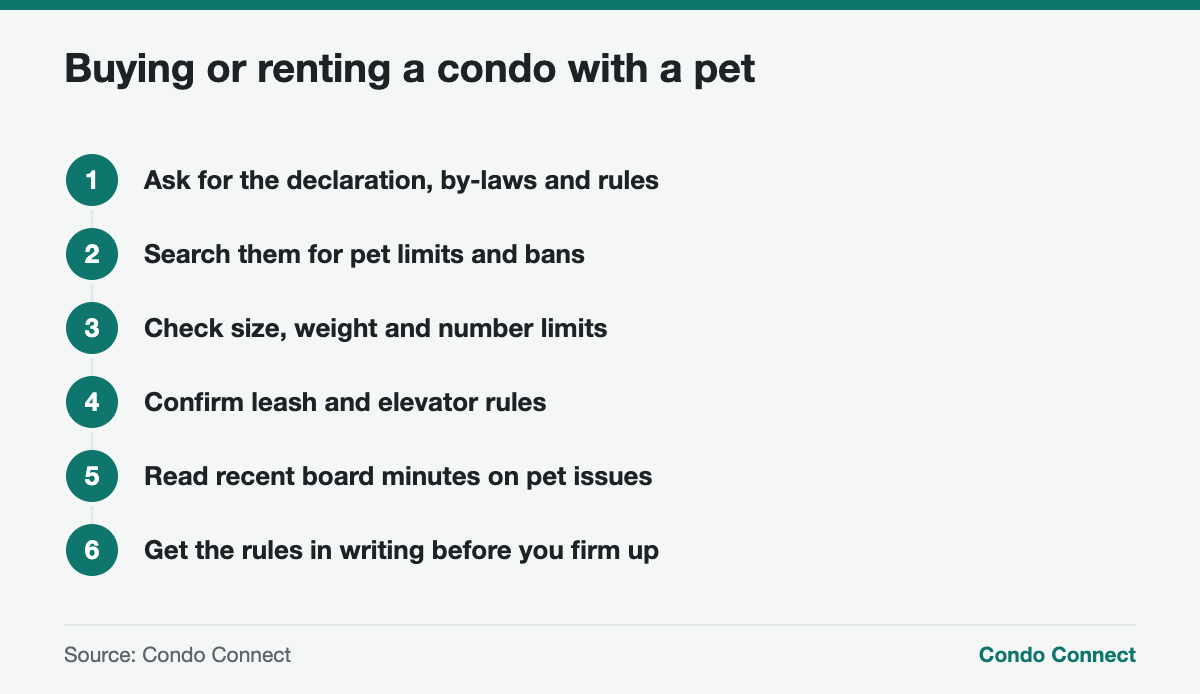
Tenants in Ontario condos are bound by the condo’s declaration, by-laws and rules just as owners are, and landlords are expected to make sure their tenants comply. If the building bans or limits pets, a lease that says otherwise does not help you in a dispute with the corporation. Ask the landlord for the pet provisions before you sign, and keep a copy. For more on condo rentals, see our explainer on condo rent control in Ontario.
Before you buy a condo with a pet
The status certificate package includes the declaration, by-laws and current rules. Read the pet provisions before your offer is firm, and check recent board minutes for proposed changes. Our status certificate guide explains what else to look for, and Condo Swipe can help you shortlist pet-friendly buildings before you book viewings.
Frequently asked questions
Can a condo ban dogs in Ontario?
Yes. A condo’s governing documents can prohibit pets, including dogs, or limit their number, size, weight or breed. The restriction must be properly made, and rules passed by the board must be reasonable. Service animals assisting people with disabilities are not considered pets, and their owners’ rights are protected under the Ontario Human Rights Code.
Are existing pets grandfathered when a condo changes its rules?
Not automatically. Many boards include a grandfathering clause for pets already living in the building when a new rule is made, but whether it applies depends on the exact wording. If your building is proposing a new pet rule, read the notice carefully and consider objecting through the owner process before it takes effect.
Is an emotional support animal allowed in a no-pet condo?
The Condo Authority of Ontario includes emotional support animals in its description of service animals, which are not considered pets. An animal may be recognized through an identifying vest or harness, or documentation from a regulated health professional. Requests are assessed under human rights principles, so provide documentation and keep communication in writing.
What can I do about a neighbour’s barking dog in my condo?
Report it to management in writing with dates and times. The corporation must enforce its governing documents, and persistent noise can be a nuisance under the Condominium Act. If the problem continues, owners can bring a case to the Condominium Authority Tribunal, which hears pet and noise disputes. Tenants should raise it with their landlord.
Find a building that fits your household
Browse condos for sale across Ontario, read our condo buyers’ guide, or ask our team to check a building’s pet rules before you book a showing.
This article is general information as of October 2026, not legal, tax, mortgage or financial advice. Rules and numbers change, so confirm the details for your situation with a licensed professional.